
There’s something oddly satisfying about things that just work. You know the kind — the gadgets, tools, or systems that hum quietly in the background while making life a little easier. You rarely think about them until something goes wrong. And when they work so well that nothing ever goes wrong… well, they almost fade into the scenery.
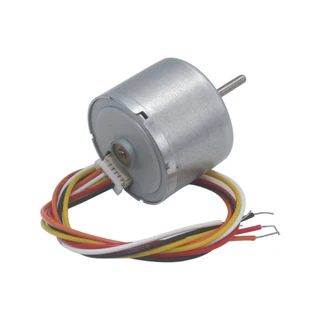
One of those behind-the-scenes heroes? The brushless DC motor. It’s not flashy. It doesn’t get the same hype as, say, the latest smartphone or electric vehicle. But it’s everywhere. In drones, electric bikes, home appliances, industrial robots — even your computer’s cooling fan might have one humming along.
But before we go deeper into how these motors work their magic, let’s rewind for a second and appreciate how far we’ve come.
A Tiny Bit of History (Promise It Won’t Be Boring)
Back in the day, traditional brushed motors ruled the scene. They were — and still are — quite simple: copper windings, a rotating armature, and the good ol’ brushes that rubbed against the commutator to keep the motor turning.
Now, here’s the kicker: those brushes wear out. They generate heat. They create friction. And friction, as any physics student will tell you, is the enemy of efficiency.
Enter: brushless motors. Instead of relying on mechanical contact, they use electronic controllers to keep things spinning. That small shift — removing the brushes — set off a quiet revolution in engineering and design.
So What Is a Brushless DC Motor, Really?
Okay, no need to pull out your engineering textbooks. Let’s break it down in regular human-speak.
A brushless DC motor, often abbreviated as BLDC, is a type of electric motor that’s powered by direct current and controlled electronically, without the need for physical brushes to transfer electricity.
Imagine you’re riding a bicycle and, instead of pushing the pedals yourself, an invisible, super-efficient friend pedals for you — endlessly, flawlessly, without ever getting tired. That’s kind of what a brushless motor does for mechanical systems.
There are two main parts to this motor: the stator (stationary part) and the rotor (the spinning part). Magnets on the rotor interact with coils on the stator, and electronic controllers regulate the sequence of energy pulses to keep everything spinning smoothly.
The magic? Zero physical contact between moving parts — just clean, efficient motion.
Why the World Loves These Motors
It’s not just nerdy engineers who are obsessed with BLDC motors. Their popularity spans industries for some very real reasons:
- Efficiency: Less energy lost to heat or friction. That means longer battery life in your devices and lower energy bills.
- Longevity: Fewer moving parts = less wear and tear. These motors are known for running reliably for years with minimal maintenance.
- Power Density: They pack a serious punch in a compact form. Perfect for space-constrained devices.
- Quiet Operation: No brushes = no noise. Great for fans, drones, or anything where silence matters.
That’s why electric cars, washing machines, and high-performance drones all love brushless motors. They’re dependable, efficient, and quietly powerful.
The Unsung Role in Your Everyday Life
You might not know it, but you’ve probably interacted with a brushless motor multiple times today.
- Your electric toothbrush? Likely brushless.
- That drone buzzing through your local park? Definitely.
- The air conditioner quietly humming while you nap? Yep.
- Even your laptop’s cooling fan, keeping it from frying while you binge-watch Netflix, runs on this tech.
This widespread adoption isn’t just hype. It’s because these motors tick all the right boxes for modern devices: energy-saving, compact, durable, and scalable.
Industrial and Commercial Muscle
Let’s move away from home for a second. In industries like manufacturing, automation, aerospace, and medical tech, brushless motors have become indispensable.
In factories, robots driven by BLDC motors assemble everything from smartphones to cars. In medical equipment, they power precision tools like surgical robots and ventilators. In agriculture, they drive autonomous tractors and irrigation systems.
The consistency and precision of brushless motors mean fewer errors, less downtime, and — frankly — fewer headaches for engineers and operators.
Let’s Talk Numbers: What’s the Real Brushless DC Motor Price?
It’s a common question, especially if you’re sourcing motors for a project or product: How much do these things cost?
The answer? It depends.
Really. There’s a huge range in brushless DC motor price, based on a bunch of factors:
- Size and torque rating
- Voltage and power output
- Type of controller (sensorless vs. sensored)
- Brand and build quality
- Whether it’s custom-made or off-the-shelf
For example, a small BLDC motor for a drone might cost $5 to $30. Meanwhile, a high-torque industrial-grade motor for robotics or e-bikes could range from $100 to several hundred dollars. Add a sophisticated controller and the price could jump even higher.
But — and this is important — the value isn’t just in the upfront cost. It’s in the lifespan, energy savings, and reliability over time.
Sensorless vs. Sensored: A Quick Sidebar
If you’ve ever shopped for these motors, you’ll notice two categories: sensored and sensorless.
- Sensorless motors rely on back EMF (electromotive force) to determine rotor position. They’re cheaper and more robust but struggle at low speeds.
- Sensored motors use hall-effect sensors to detect rotor position. This allows smooth, precise startup and low-speed operation — ideal for things like electric vehicles.
Your choice will depend on your application, budget, and need for control accuracy.
The BLDC Motor + Controller Duo
Here’s something folks often overlook: the motor alone is just half the story. You also need a good electronic speed controller (ESC) or driver.
This controller sends the right signals to the motor, telling it when and how to spin. Think of it like a conductor guiding an orchestra. If the conductor messes up, the whole performance goes sideways.
Investing in a high-quality ESC ensures your motor runs smoothly, efficiently, and reliably — especially under different loads and temperatures.
Customization is the Name of the Game
One of the coolest things about brushless motors is how customizable they are.
Manufacturers can tweak everything — from winding configurations to shaft lengths to waterproofing — depending on what you need. Got a drone that needs ultra-lightweight motors? Done. Building an electric skateboard that needs serious torque? Covered.
This level of flexibility is part of why BLDC motors have found their way into everything from consumer gadgets to niche aerospace applications.
Sustainability and the Green Movement
We’d be remiss if we didn’t touch on the environmental side of things. Energy efficiency isn’t just about saving money — it’s also about reducing our footprint.
As the world shifts toward greener energy and more sustainable practices, brushless motors play a big role. Less energy wasted. Fewer replacements needed. Lower overall consumption.
They’re an essential piece of the puzzle in electric vehicles, solar-powered systems, and energy-conscious manufacturing setups.
Challenges and Future Innovations
Of course, no technology is perfect.
- Cost is still a barrier for some low-budget applications.
- Complexity in electronic control systems can be a learning curve.
- Maintenance of controllers and firmware updates can be a hassle in certain industrial settings.
That said, the future looks bright.
Advancements in control algorithms, magnet materials, and 3D printing are making BLDC motors even more powerful and affordable. And with AI-driven controllers, motors can now optimize themselves in real-time, adjusting to load, temperature, and performance demands without human intervention.
We’re already seeing self-driving farm equipment, autonomous warehouse bots, and smart HVAC systems — all thanks to the evolution of motor tech.
Choosing the Right Motor: It’s Personal
So, how do you pick the right BLDC motor? Here are a few questions to ask:
- What’s your power requirement? Know your voltage and current specs.
- What kind of load will it drive? Constant or variable?
- Do you need precision? Go sensored if so.
- Space and weight constraints? Compact options abound.
- Budget flexibility? Remember the long-term value.
If you’re a hobbyist, there are tons of forums, communities, and YouTube reviews that can guide your choice. If you’re an engineer or product developer, working directly with motor suppliers or custom design services is often the way to go.
Final Thoughts: The Quiet MVP of Modern Machines
In a world obsessed with flashy innovation, it’s easy to overlook the quiet performers. But make no mistake: brushless DC motors are at the heart of some of the most important technologies shaping our present and future.
Whether you’re flying a drone, building a robot, or designing the next generation of green tech, chances are — there’s a brushless motor doing the heavy lifting behind the scenes.
So next time you hear that soft whirr from your electric fan, or feel the effortless glide of your e-bike, take a moment. That’s precision engineering in motion. That’s the sound of progress.
That’s the quiet hero of the electric age, doing what it does best — without making a fuss.