
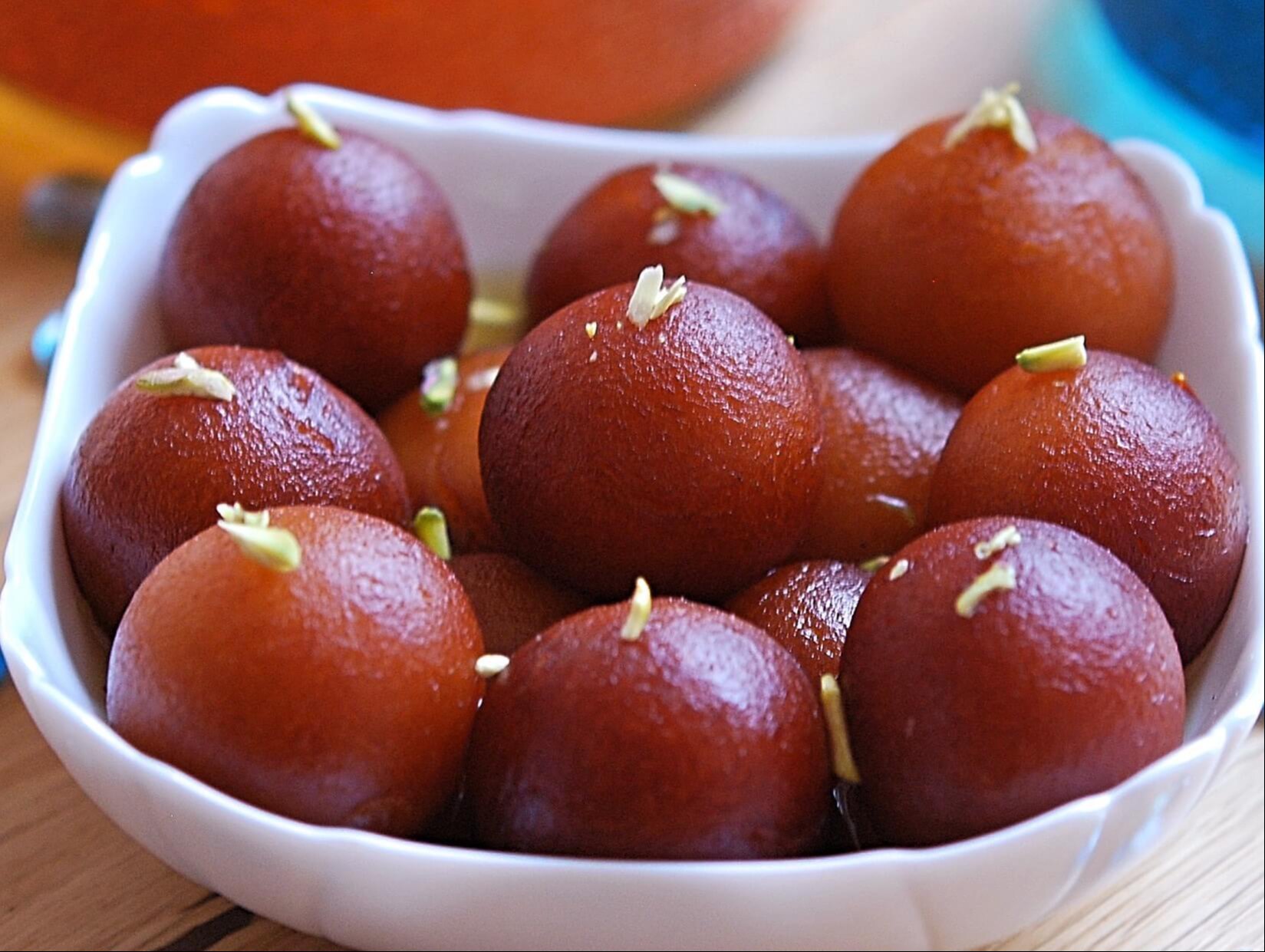
Gulab Jamun is an emotion as much as a dessert. Gulab Jamun has a prestige that cuts across generations and cultures, appearing at every wedding feast, festive table, and celebration across India and much of South Asia. In India and other places where Indian food is popular, it is one of the most cherished desserts due to its thick texture, syrupy sweetness, and melt-in-your-mouth appeal.
The origin, ingredients, cooking method, variants, nutritional profile, health consequences, cultural importance, and modern adaptations of gulab jamun are all thoroughly examined in this article. Knowing what ingredients go into this well-liked dessert will help you enjoy it more sensibly and sensibly, regardless of whether you’re a foodie or a health-conscious eater.
The History and Origin of Gulab Jamun
Although it is thought to have originated from Persian and Central Asian influences, gulab jamun has a long history in Indian cuisine. Given their similar shapes and sizes, “Jamun” refers to the Indian black plum, whereas “Gulab” signifies rose water. Persian delicacies like “luqmat al-qadi,” a fried sweet ball dipped in syrup, are said to have influenced the dessert’s refinement during the Mughal Empire in medieval India, according to culinary historians.
It developed into the delicacy we know today over centuries: soft dough balls made of khoya (milk solids), deep-fried in oil or ghee, and steeped in a warm, fragrant sugar syrup infused with cardamom and rose water.
Components and Conventional Method of Preparation
A few simple but essential items are needed for the traditional Gulab Jamun recipe:
The main component, khoya (Mawa), is created by slowly boiling milk until all the water has evaporated and thick milk solids are left behind.
All-purpose flour, or maida, is used to give the dough structure and to bind the khoya.
A leavening agent that gives the balls their soft, fluffy texture is baking powder or soda.
For deep-frying, use oil or ghee.
Sugar syrup: Infused with cardamom, rose water, and occasionally saffron.
To get a golden-brown tint, the dough is kneaded, formed into little balls, and then fried at a low temperature. The balls are dipped in warm sugar syrup after they have been fried, which causes them to swell and absorb the sweetness and flavor.
Disparities by Region
Although the classic Gulab Jamun is still the most often consumed type, there are other regional and contemporary variations:
A darker variation, kala jamun is frequently filled with dry fruits and baked for a longer time to achieve a caramelized flavor.
Rather than being soaked in syrup, dry gulab jamun is coated in powdered sugar or desiccated coconut.
Bread Gulab Jamun: A common dish in home kitchens, made with bread rather than khoya.
Where khoya is less readily available, jamun made from sweet potatoes or paneer is used.
Stuffed Gulab Jamun: For more depth, stuff it with cardamom, saffron, or nuts.
Every variant adds a unique twist while accommodating regional dietary requirements and tastes.
Characteristics of Gulab Jamun’s Nutrition
Gulab Jamun has an unrivaled texture and flavor, but its rich nutritional makeup should also be recognized.
The typical nutritional value of a medium-sized gulab jamun (around 30–40g) is:
Between 150 and 180 kcal
25–30g of carbohydrates
20–25g of sugars
2–3g of protein
6–8g of fat
Blood cholesterol: 10–15 mg
Saturated fats and simple sugars account for most of its calories. Because of its dairy foundation, it contains trace levels of calcium and protein, but its high sugar and fat content makes it a high-calorie treat.
Health Issues and Concerns
Like many other classic Indian desserts, gulab jamun is not intended to be consumed frequently or in excessive quantities. The following are important health implications to consider:
1. Sugar-filled
Gulab jamun has a substantial glycemic load because each slice is soaked in sugar syrup. This is inappropriate for those with diabetes or insulin resistance because it might cause rapid blood sugar rises.
2. Dense in Calories
Even a single dish can contain over 150 calories, and it’s easy to consume numerous pieces in one sitting, especially during celebrations. This can present difficulties for people who are attempting to reduce or maintain their weight.
3. Content of Saturated Fat
Gulab Jamun, which is made with khoya and frequently deep-fried in ghee, has a lot of saturated fats, which can lead to heart problems if consumed in excess.
How to Mindfully Savor Gulab Jamun
If eaten with awareness, gulab jamun can still be included in a balanced diet despite its decadent nature:
Portion control: Eat only one slice and take your time enjoying it.
Occasional treat: Don’t make it a regular dessert; save it for rare occasions.
Homemade versions: You may regulate the amount of sugar and oil when you make it at yourself.
Be careful when pairing it with other high-calorie dishes. Serve it with something light.
Creating a Healthier Gulab Jamun
There are a few ways to make Gulab Jamun a little healthier, but nothing compares to the original:
Bake rather than fry: Baking the dough balls greatly lowers their fat content.
Use paneer or reduced-fat milk in place of full-fat khoya.
Natural alternatives to sugar include stevia or syrup made from jaggery.
Add fiber: You can add some fiber to the dough by using a little amount of whole wheat flour.
These adjustments improve the dessert’s suitability for a greater variety of diets, although somewhat altering its texture.
The Cultural Symbolism of Gulab Jamun
Gulab jamun is more than just food; it’s a representation of joy and plenty. It represents the sweetness of a fresh start and is frequently the first dessert offered at weddings. It is regarded as pure and auspicious in religious offerings. From Diwali to Eid, no Indian celebration would be complete without a dish of warm, syrup-filled gulab jamuns.
Outside of India, this dessert has great cultural significance in Bangladesh, Nepal, Pakistan, and even the Caribbean.
Gulab Jamun in Contemporary Cooking
Gulab Jamun has evolved beyond the classic dish thanks to modern chefs. It has been incorporated into modern cuisine in:
Fusion desserts include donuts, trifle puddings, and gulab jamun cheesecakes.
Ice Cream Toppings: Add crumbled gulab jamun to vanilla or saffron ice cream for a rich treat.
Miniature jamuns are used as cocktail garnishes in some high-end bars’ dessert cocktails.
These modifications demonstrate how, despite maintaining its essential characteristics, this traditional dessert still stimulates innovation.
The Global Palate and Gulab Jamun
Gulab Jamun is no longer limited to the subcontinent because of the Indian diaspora. It currently appears on the menus of Indian eateries worldwide and has gained popularity in nations distant from its birthplace. It appeals to everyone because of its simplicity and opulent flavor.
Children and Gulab Jamun
Gulab Jamun’s sweetness and tender texture make it a popular choice for kids. However, considering the high sugar content, parents should pay attention to portion proportions. You can have a delightful treat without going overboard with a modest half-piece.
During festivals and family get-togethers, it’s also a great dessert to teach kids about the cultural significance of Indian sweets.
Shelf Life and Storage
At room temperature, freshly cooked gulab jamun keeps for two to three days; when refrigerated, it keeps for up to a week. Commercially packaged ones could contain preservatives to prolong their shelf life, but to preserve taste and safety, always check the expiration dates and store them correctly.
Gulab Jamun at Celebrations
Without sweets, no Indian festival is complete, and gulab jamun is frequently at the top of the list. Gulab Jamun is honored at religious festivals, weddings, and birthdays. In many homes, guests are welcomed with a bowl of warm jamuns and smiles. It stands for friendliness, coziness, and giving.
In conclusion, mindfully savoring tradition
Gulab Jamun serves as a link between culture, tradition, and family and is more than just a dessert. It is a cuisine that has no bounds because of its rich history and worldwide appeal. However, it’s important to enjoy this traditional dessert mindfully in today’s health-conscious society.
Making educated judgments about when to eat it, how much to eat, or even trying out healthier options is made easier when one is aware of its nutritional profile. By doing this, one can learn how to judiciously incorporate this delectable treat into a balanced lifestyle without having to give it up.
Savor your gulab jamun with understanding and appreciation for a custom that has made life sweeter for generations, in addition to using your taste buds.