
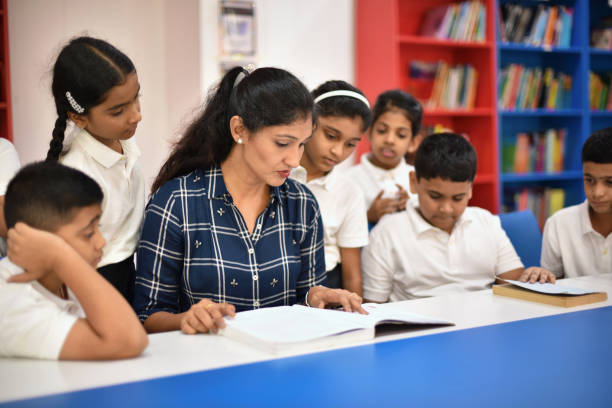
The Telangana academic scene is significantly shaped by the Telangana State Board of Intermediate Education (TSBIE). It oversees the crucial two-year period of intermediate education, which acts as a transitional period between high school and college. Since its founding, TSBIE has prioritized providing high-quality instruction, optimizing testing procedures, and getting students ready for competitive careers.
This article will provide a thorough analysis of the TSBIE’s importance in the Telangana educational system by examining its history, organization, functions, curriculum, examination systems, changes, and difficulties.
History and Foundation
After Andhra Pradesh was divided into two states in 2014, Telangana became its own state and the Telangana State Board of Intermediate Education was created. A distinct educational board that would only concentrate on the requirements and demographics of Telangana’s youngsters was required as a result of the creation of this new state.
The Andhra Pradesh Board of Intermediate Education oversaw Telangana’s intermediate education system before TSBIE was established. With the creation of TSBIE, the government was able to create policies, curricula, and test formats that more accurately represented the academic and cultural needs of Telangana’s many regions.
Mission and Mandate
Regulating, overseeing, and developing intermediate education in Telangana is the main responsibility of TSBIE. Its goals go beyond academic education; it seeks to advance innovative teaching practices, support students’ overall growth, and improve young people’s employability.
The main objectives of TSBIE are:
creating and revising curricula to meet contemporary academic requirements.
coordinating with and keeping an eye on junior colleges to ensure quality.
carrying out prompt, equitable public examinations.
encouraging skill-based learning and vocational education.
promoting inclusive education by means of social programs and scholarship schemes.
Academic Programs & Courses Available
To meet the academic goals of students throughout Telangana, TSBIE provides a broad range of courses. The first year (Class 11) and the second year (Class 12) comprise the intermediate education system.
1. General Education
Three primary streams are among them:
Science Stream: For students who want to pursue careers in engineering, medicine, or scientific research, courses including physics, chemistry, mathematics, biology, and computer science are available.
Commerce Stream: For students aspiring to work in business, finance, or accounting, courses like accounting, business studies, and economics are offered.
History, political science, psychology, geography, and other humanities courses are included in the Arts/Humanities Stream, which provides access to jobs in the social sciences, education, and civil services.
2. Career Training Programs
TSBIE has also concentrated on vocational education. The goal of these programs is to give students real-world, industry-relevant skills. Vocational programs are available in fields like electronics, fashion technology, IT, hotel management, health sciences, and agriculture.
For students who want to enter the workforce with a specialized skill set but may not immediately pursue higher education, vocational courses are particularly advantageous.
Institutional supervision and affiliation
Government, private aided, and private unaided junior colleges in Telangana are granted affiliation by TSBIE. Every institution is assessed based on its academic standards compliance, faculty credentials, student capacity, and infrastructure. The board uses this system to guarantee uniformity in the caliber of intermediate education offered throughout the state.
In order to ensure compliance and foster accountability, the board also performs audits and inspections of associated institutions. An institution’s affiliation may be canceled or suspended if it does not meet the requirements.
Structure of the Examination
Every year, both first- and second-year students take the Intermediate Public Examinations (IPE). These tests are important since they establish a student’s eligibility for both professional entrance exams and undergraduate programs.
Highlights of the Exam:
Science students, for example, are required to take both written theory tests and lab-based practicals.
Distribution of Marks: In general, 100 marks are assigned to each topic. Certain topics are separated into two sections: Part A (theory) and Part B (practical).
Language Papers: English and a second language (such as Telugu, Hindi, Urdu, etc.) are usually the two language courses covered in the curriculum.
Grading System: To lessen stress and promote positive learning attitudes, TSBIE uses a grade-based evaluation system.
The board has implemented digital tools in recent years to expedite the examination process, including digital marksheet generation, electronic evaluation in certain areas, and online hall ticket delivery.
Development of Curricula and Textbooks
The creation and ongoing revision of the curriculum is one of TSBIE’s primary duties. Particularly for students studying for national-level entrance exams like NEET, JEE, and CA, the board makes sure that the curriculum is in line with national norms.
This approach is aided by curriculum committees made up of subject matter experts, academics, and business leaders. To make learning more engaging, the board has incorporated digital resources, project-based learning, and skill-based modules into several topics.
Initiatives for Modernization and Reform
TSBIE has carried out several reforms in the last ten years with the goal of updating the educational system and making it more student-centered.
Important Reforms:
Digitalization: Digital platforms are now widely used for everything from registration and exam forms to certificates and results.
Vocational Expansion: Under vocational education, cutting-edge courses in data science, coding, and artificial intelligence are being offered.
Awareness of Mental Health: The board has also started initiatives to help students who are stressed, particularly around test season.
Updated Assessment Procedures: In an effort to evaluate students more comprehensively, several universities have implemented continuous internal evaluation, or CIE.
In response to shifting societal demands, these reforms aim to prepare students for challenges in the classroom and in the workplace.
Outcomes and Pass Rates
The announcement of the intermediate results is a significant occasion in Telangana every year. By gradually enhancing its result processing method, TSBIE has greatly decreased delays and inconsistencies.
The science stream frequently achieves superior outcomes because of students’ concentrated preparation for competitive exams, though pass percentages vary by stream. In order to provide students who fail one or more topics another chance without losing an academic year, the board now offers supplemental tests.
Financial Aid and Scholarships
Scholarships for marginalized and economically disadvantaged students are made possible in part by TSBIE. The board serves as a conduit for several state and federal government programs that offer:
reimbursement of tuition for students from low-income households.
scholarships awarded to high-achieving students based on merit.
special treatment for rural youngsters, minorities, and female pupils.
These programs provide fair access to education and aid in raising enrollment and retention rates, particularly in poor and rural areas.
The difficulties that TSBIE faces
Notwithstanding its advancements, TSBIE continues to confront a number of obstacles:
Infrastructure Gaps: Basic amenities like labs and libraries are still lacking at some junior colleges, particularly those in rural areas.
Overcrowding: The volume of students at well-known universities in metropolitan areas frequently overwhelms them, lowering the standard of instruction.
Teacher Shortages: It is still difficult to find and educate competent faculty, especially in vocational disciplines.
Pressure on Students: Due to the intense competition of entry tests, students experience high levels of stress, which makes them require additional mental health treatment.
To guarantee long-lasting progress, these issues call for sustained investment and governmental commitment.
Function in Higher Education and National Integration
Additionally, TSBIE serves as a link for students who want to enroll in schools around India. The board makes sure that Telangana students are not at a disadvantage when competing nationally by coordinating curricula with NCERT guidelines and guaranteeing comparability with national admission exams.
Furthermore, institutions and colleges all around India accept the diplomas that TSBIE issues, facilitating a seamless transition to higher study.
Looking Ahead: TSBIE’s Future
More technological integration, individualized learning routes, and improved cooperation with businesses and universities are all part of TSBIE’s future goal. Additionally, the board is investigating cutting-edge pedagogies including experiential education and blended learning.
Future plans consist of:
launch of learning platforms driven by AI.
vocational training connected to the industry.
expansion of options for apprenticeships and internships.
a strong network of mentors and alumni for intermediate students.
Telangana’s economic and technical development makes TSBIE’s role in producing a new generation of knowledgeable, capable, and moral citizens even more crucial.
In conclusion
Since its founding, the Telangana State Board of Intermediate Education has advanced significantly. It is a vibrant educational organization dedicated to raising educational standards and providing opportunities for Telangana’s young, not just an examination board.
TSBIE has established itself as a model for state-level educational governance through its commitment to curriculum creation, examination reform, and student welfare. The board is positioned to continue having a significant impact on the academic and career paths of millions of students throughout the state as it develops.