
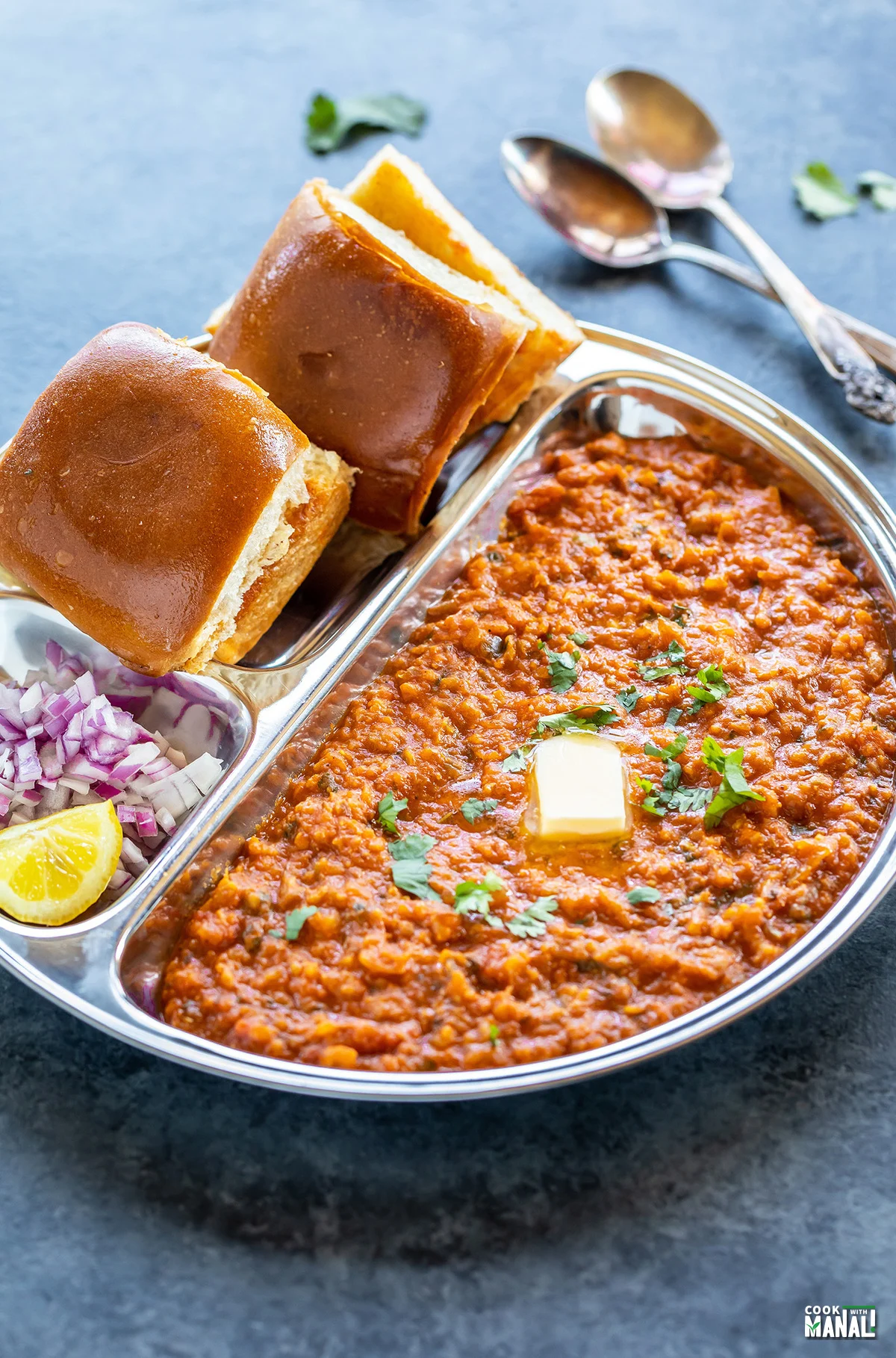
Pav Bhaji is a culinary phenomenon rather than merely a dish. This tasty and hearty cuisine, which originated on the busy streets of Mumbai, has become a staple in Indian homes and hearts as well as those all over the world. More than just food, the pairing of a spicy, mashed vegetable curry (bhaji) and a buttery bread (pav) is an experience. Pav bhaji, which has its roots in the city’s working-class districts, has developed from a quick lunch choice to a popular dinner for any occasion.
We’ll go over the lengthy history, necessary components, and methodical steps involved in creating the ideal pav bhaji in this extensive guide. We will also explore how this simple dish has become legendary in Indian cuisine, as well as modifications, serving ideas, and nutritional considerations.
1. Pav Bhaji’s History
The intriguing history of Pav Bhaji starts in the 1850s, when Mumbai (then known as Bombay) was going through an industrial revolution. Workers at textile mills required a substantial, portable lunch that was easy to prepare and consume. Street sellers started preparing a mixture of leftover veggies, mashing them with spices, and serving it with “pav,” or buttered bread rolls that were modeled by Portuguese buns brought to India during the colonial era.
Pav Bhaji gained popularity outside of the mill workers over time. Students, office workers, tourists, and foodies from all walks of life were drawn in by the aroma of sizzling butter and spices.
2. Why People Love Pav Bhaji
The dish’s flavor, simplicity, and adaptability are what make it so popular. Pav bhaji is an extremely tasty one-pot meal that can be prepared quickly. It provides a harmony of fats, carbohydrates, vegetables, and spices, making it a popular comfort food.
Pav Bhaji is always delicious, whether it is consumed at a fancy restaurant, a food court, or a roadside stand. Additionally, it can be easily modified to accommodate vegan, vegetarian, or even Jain diets.
The Crucial Elements in Pav Bhaji
Pav Bhaji consists of two main parts:
Bhaji is a mashed, spiced vegetable curry made with potatoes, cauliflower, peas, and capsicum, among other ingredients.
Pav are soft bread rolls that are toasted on a tawa (griddle) after being buttered.
Additionally essential to the experience are garnishes like sliced onions, lemon wedges, and fresh coriander leaves.
4. Traditional Pav Bhaji Ingredients For the Bhaji:
Three to four medium potatoes, mashed after boiling
One cup of florets of cauliflower
Half a cup of frozen or fresh green peas
Half a cup of finely chopped capsicum
Two medium onions, cut finely
Two medium tomatoes, either pureed or finely chopped
One tablespoon of garlic-ginger paste
Two to three teaspoons of butter
Two tablespoons of oil
One or two green chilies, if desired
One teaspoon of turmeric
One spoonful of red chili powder from Kashmir
Two tablespoons of masala for Pav Bhaji
Add salt to taste.
Garnish with fresh coriander leaves.
Water as required
Regarding the Pav:
Eight Pav Buns
Toasting butter
A dash of flavor-enhancing pav bhaji masala
To assist:
Finely chopped onions
slices of lemon
Extra butter
5. Getting Ready: A Comprehensive Guide to Pav Bhaji
Bring the cauliflower, peas, and potatoes to a boil until they are tender. Put them aside after coarsely mashing them.
In a big pan or tawa, heat the butter and oil. Sauté the onions until they get golden brown.
Cook the ginger-garlic paste until the raw scent goes away.
Cook the capsicum for a few minutes until it becomes soft.
Cook the tomatoes until they are mushy and tender. You can expedite the process by adding a small amount of water.
Add the pav bhaji masala, turmeric, and chili powder and stir. Give the spices a minute to simmer.
Mix thoroughly after adding the mashed veggies. Continue mashing with the back of a spoon or a potato masher.
To achieve the correct consistency, add water little by little. To let the flavors to blend, simmer for ten to fifteen minutes.
Add chopped coriander and a large glob of butter and stir.
6. Paving preparation: Horizontally cut the pav buns in half.
Heat butter on a tawa. You can optionally top the butter with a small amount of pav bhaji masala.
Toast the buns until brown and just beginning to crisp on both sides.
7. Pav Bhaji Masala: The Secret Substance
The pav bhaji masala is the key to the dish’s deep taste. Usually, coriander seeds, cumin, dry mango powder, fennel, black pepper, cloves, and dried red chilies are used to make this spice blend. Although the flavors of commercial masalas (such as Everest, MDH, or homemade variants) differ slightly, they are necessary to get the recognizable flavor.
The spices can be ground fresh and roasted to make homemade masala.
8. How to Become the Ideal Pav Bhaji
For a real street-style taste, use a lot of butter.
For a smooth texture, make sure the vegetables are well mashed.
To add sharpness and a deep red hue, add tomato puree.
For optimal flavor, toast the pav buns right before serving.
Especially when cooking for kids, you can change the amount of spice to your liking.
9. Pav Bhaji Variations
Various imaginative variations of pav bhaji have surfaced over time:
Cheese Pav Bhaji: For added decadence, top with shredded cheese.
Paneer Pav Bhaji: To provide a protein-rich twist, crumbled paneer is added to the bhaji.
Jain Pav Bhaji: Made without potatoes or other root vegetables, garlic, or onions.
A chunkier variation with mostly unmashed veggies is Khada Pav Bhaji.
The combination of tawa pulav and pav bhaji is eaten over spicy rice.
10. The Indian Street Food Culture’s Pav Bhaji
One of India’s most recognizable street dishes is pav bhaji. Every vendor offers a different variation of the dish, which can be found anywhere from Juhu Beach to Chowpatty and in places like Pune, Delhi, Ahmedabad, and Kolkata. Some add extra butter, others add extra heat, and some garnish it with a dab of cream or cheese.
The bhaji is usually cooked in big quantities by street vendors using a flat, large tawa, constantly mashing and mixing while the aroma fills the air.
11. Suggestions for Serving
The finest way to serve pav bhaji is hot, with:
A thick layer of melted butter on top
Finely sliced onions
slices of lemon for tang
Fresh coriander
On the side, toasted pav
For a full meal, serve it with a glass of cool lassi, masala soda, or buttermilk.
12. Pav Bhaji as a Food for a Party
A popular dish for parties and get-togethers, pav bhaji is simple to scale up. You can prepare it ahead of time and reheat it right before serving. Guests can personalize the pav with cheese, additional spice, or garnishes, and it can be toasted in batches.
A pav bhaji bar is also set up where patrons may construct their own plates.
13. Aspects of Nutrition
Despite being tasty and made with vegetables, pav bhaji is frequently served with refined-flour pav and laden with butter. For a more healthful version:
Reduce the amount of butter or use olive oil instead.
Serve with multigrain bread or whole wheat pav.
Raise the percentage of vegetables
Instead of toasting the pav in butter, bake or steam it.
Depending on the amount and toppings, a serving of pav bhaji usually has 300–400 calories.
14. Producing Pav at Home
Making pav at home can improve the dish even more, even though store-bought pav is quite acceptable. Soft and fluffy, homemade pav is devoid of preservatives. Pav is made from flour, milk, sugar, and yeast. It is cooked and then smeared with butter to give it a golden appearance.
Those who want to utilize whole wheat or gluten-free substitutes may find homemade pav particularly helpful.
15. Pav Bhaji Expands Worldwide
Today, Pav Bhaji is acknowledged outside of India. This meal is served to both natives and foreigners in Indian restaurants in the UK, USA, Australia, and the Middle East. It is one of the most well-known vegetarian Indian recipes and is even mentioned in cookbooks, cooking programs, and YouTube channels.
Its broad appeal has been highlighted by the experimentation of certain international chefs with pav bhaji pizza, sliders, and even pastries filled with pav bhaji.
16. For the Soul, Pav Bhaji
Pav Bhaji has an innately reassuring quality. For many Indians, the combination of warm, buttery bread and creamy mashed vegetables evokes fond memories. It brings back memories of childhood, home, beach trips, and late-night food vendors.
Through stories, shared tastes, and plates heaped with bhaji and pav, this comfort cuisine captivates the senses and unites people.
In summary, Pav Bhaji is more than just a meal.
An excellent illustration of India’s diverse street food culture is Pav Bhaji, which is tasty, versatile, and adored by all. Every mouthful delivers a surge of taste, tradition, and gourmet delight, regardless of how many times you’ve enjoyed it.
Pav bhaji is more than just a recipe; it’s a celebration of comfort, community, and inventiveness that has grown from its modest origins in the streets of Mumbai to its appearance on menus around the world.